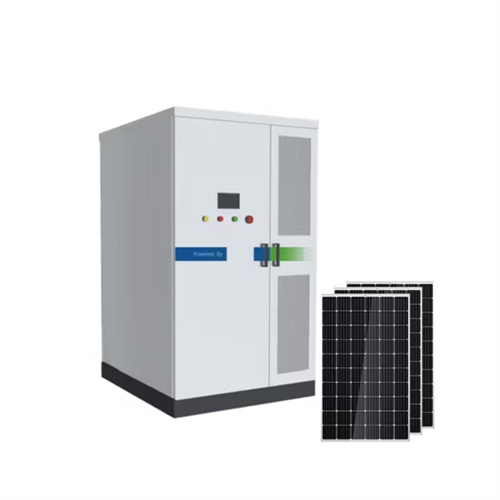
There are several types of solar panel mountsthat can be installed on a property owner’s land or home. The most commonly used mounting system is a classic roof-penetrating rack. This is simply a rack that is drilled into a roof with additional screw holes or other attachment mechanisms on top of its surface so that the. .
The next category of rooftop solar panel mounts is specific to surfaces that are not suitable for drilling. This includes tile and metal roofs. For tile rooftops, you can add a special rack like the one. .
The type of mounts used for rooftop solar panels can be much different than the ones used on a ground-level system. In both cases, however, you.
[pdf] A Net Zero scheme is available to businesses in Tees Valley, which covers five council areas: Darlington, Hartlepool, Middlesbrough, Redcar and Cleveland and Stockton-on-Tees. Businesses in Tees Valley can benefit from fully-funded consultancy support and up to £2,000 grant funding, alongside easy access to online tools and. .
Low Carbon Workspacesgrant that provides support for businesses in Buckinghamshire, Berkshire, Hertfordshire, Northamptonshire, Bedfordshire, Luton and Milton Keynes. By switching to energy. .
Businesses looking for solar panels in Dorset get an even better deal. With the Low Carbon Dorsetscheme, you can get grants for up to 50% of your low carbon project costs, between £1,000 and £75,000. These grants.
[pdf] This is a list of notable photovoltaics (PV) companies. Grid-connected solar photovoltaics (PV) is the fastest growing energy technology in the world, growing from a cumulative installed capacity of 7.7 GW in 2007, to 320 GW in 2016. In 2016, 93% of the global PV cell manufacturing capacity utilizes crystalline. .
Top 10 by yearSummaryAccording to EnergyTrend, the 2011 global top ten , solar cell and solar module manufacturers by capacity were found in countries. .
Other notable companies include: • , Hong Kong, China• , Tucson, Arizona, US• , California, US• , Canberra, Australia .
• 1. ^ . .
China now manufactures more than half of the world's solar photovoltaics. Its production has been rapidly escalating. In 2001 it had less than 1% of the world market. In contrast, in 2001 Japan and the United States combined had over 70% of world production. By. .
• • • •
[pdf]